The idea
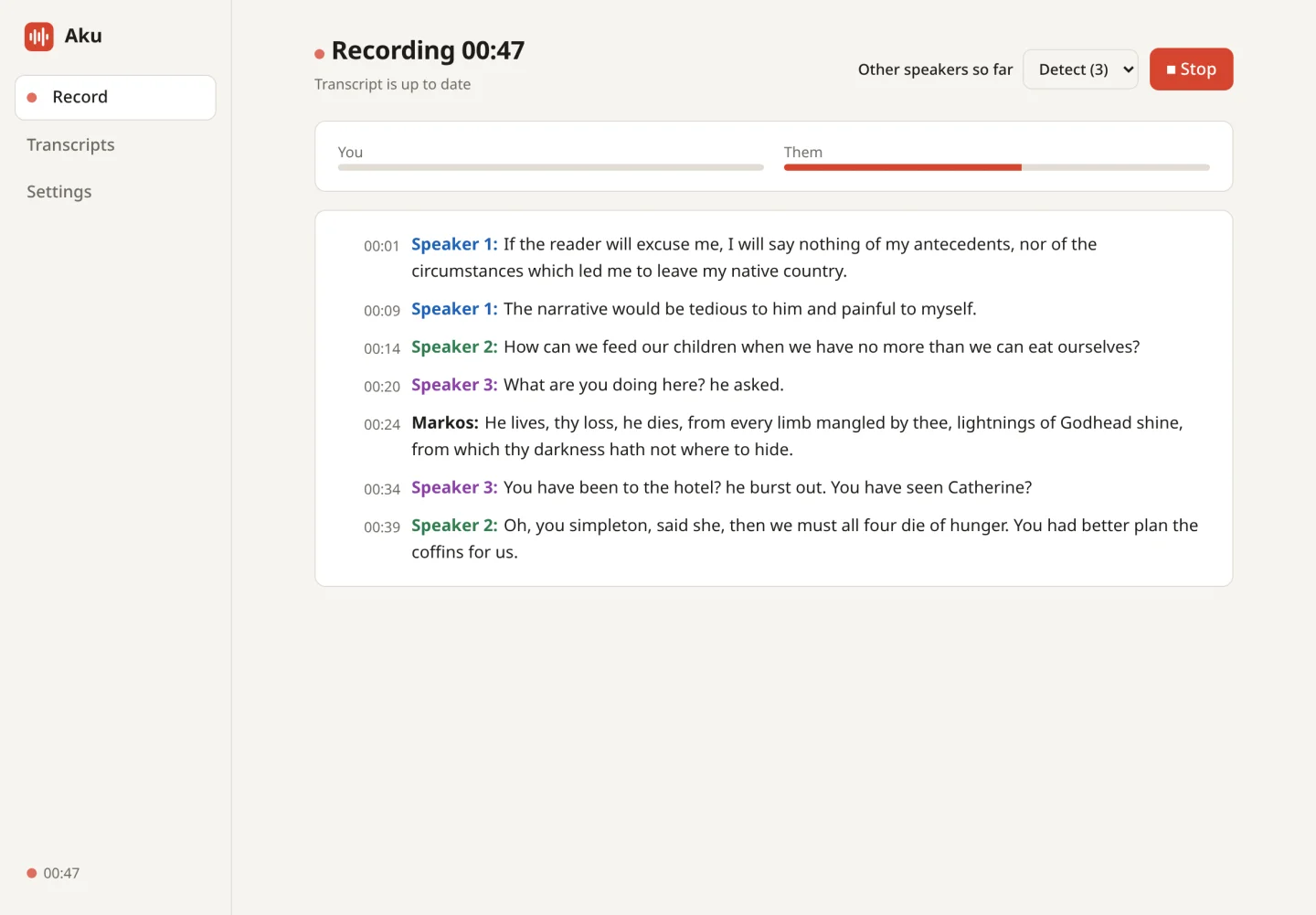
Aku comes from the Greek άκου, “listen”. I take notes from a lot of calls, and my routine used to be: record in one program, then transcribe afterwards in another. Aku does it in one step. I press a button and have the call, and when it ends the transcript is ready, with every line marked by who said it.
How it works
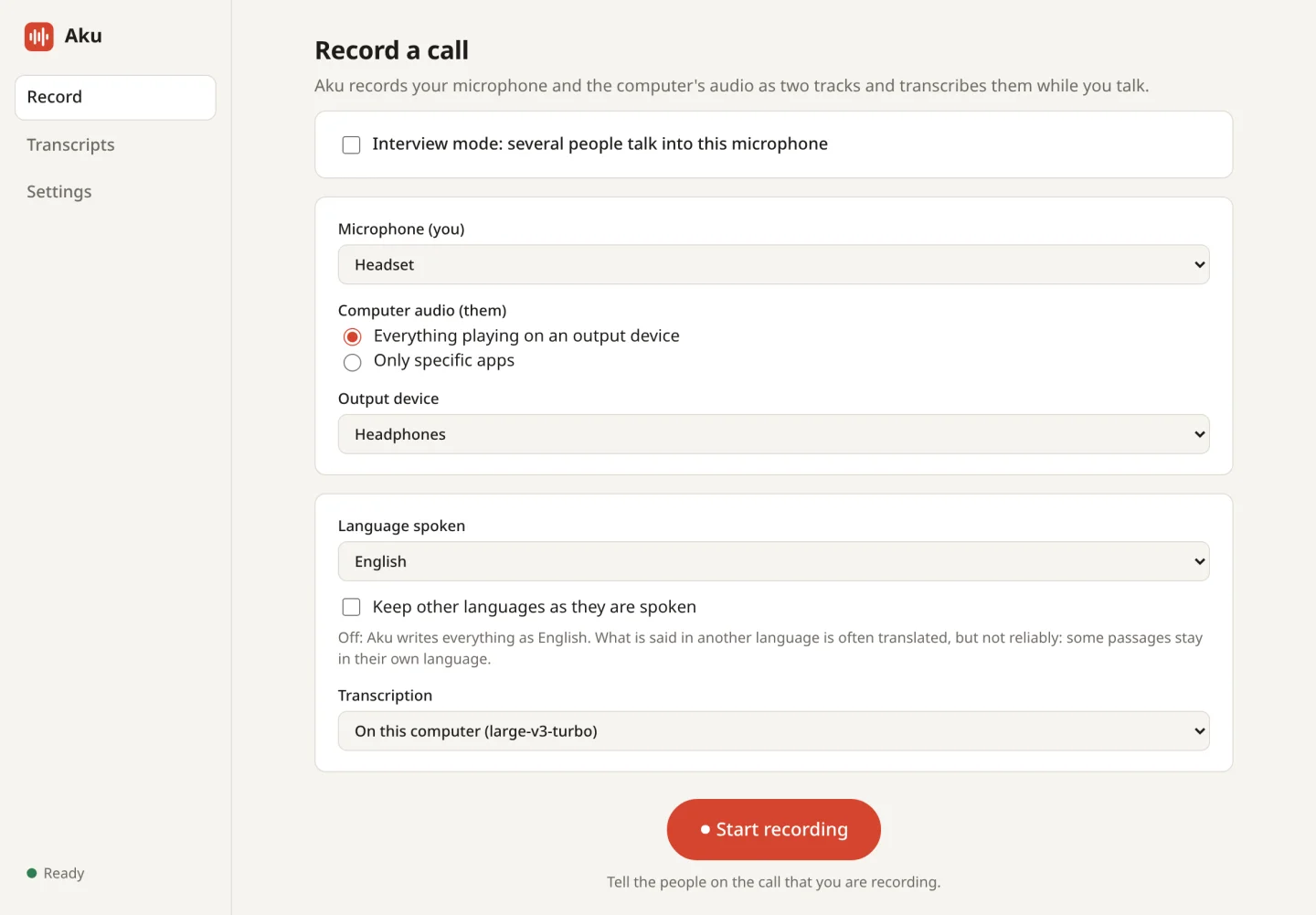
Aku records two tracks: my microphone, and the sound coming out of the computer. The second can be everything, or only the apps I pick, like Teams or Discord, so notifications and music stay out of the notes. Speech is transcribed in short pieces while the call goes on, about two seconds behind the speaker.
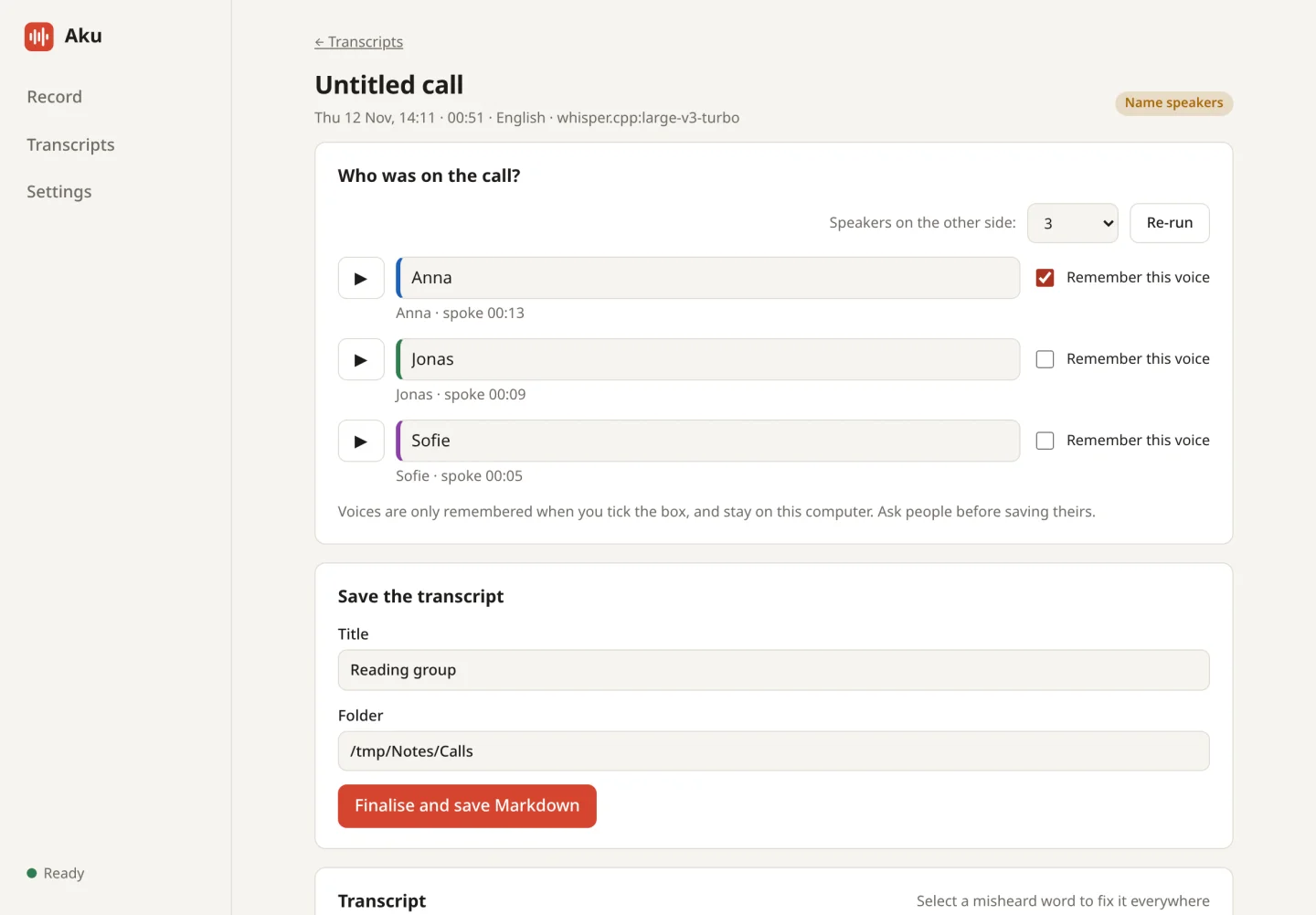
After the call, Aku separates the other voices, plays a short clip of each and asks me who it is. If I ask it to, it remembers a voice and suggests the name next time. The transcript ends up as a plain Markdown file in my notes.
It works in dozens of languages and can detect the language by itself, also on calls that switch between them. It can also translate everything into one language I choose, straight into the transcript. For in-person interviews, there is a mode for several people around one microphone.
Local by default
By default, transcription runs on a local model on the laptop’s own graphics chip, and ten minutes of audio takes about 40 seconds. For more speed or accuracy, I can switch a recording to OpenAI’s cloud API instead. Nothing leaves the machine unless I choose that. A voice counts as biometric data, so Aku saves one only when I tick a box, keeps it on the laptop, and forgets it on request.
The source and a Linux installer are on GitHub. Aku is licensed under AGPL-3.0-or-later.
Inside Aku